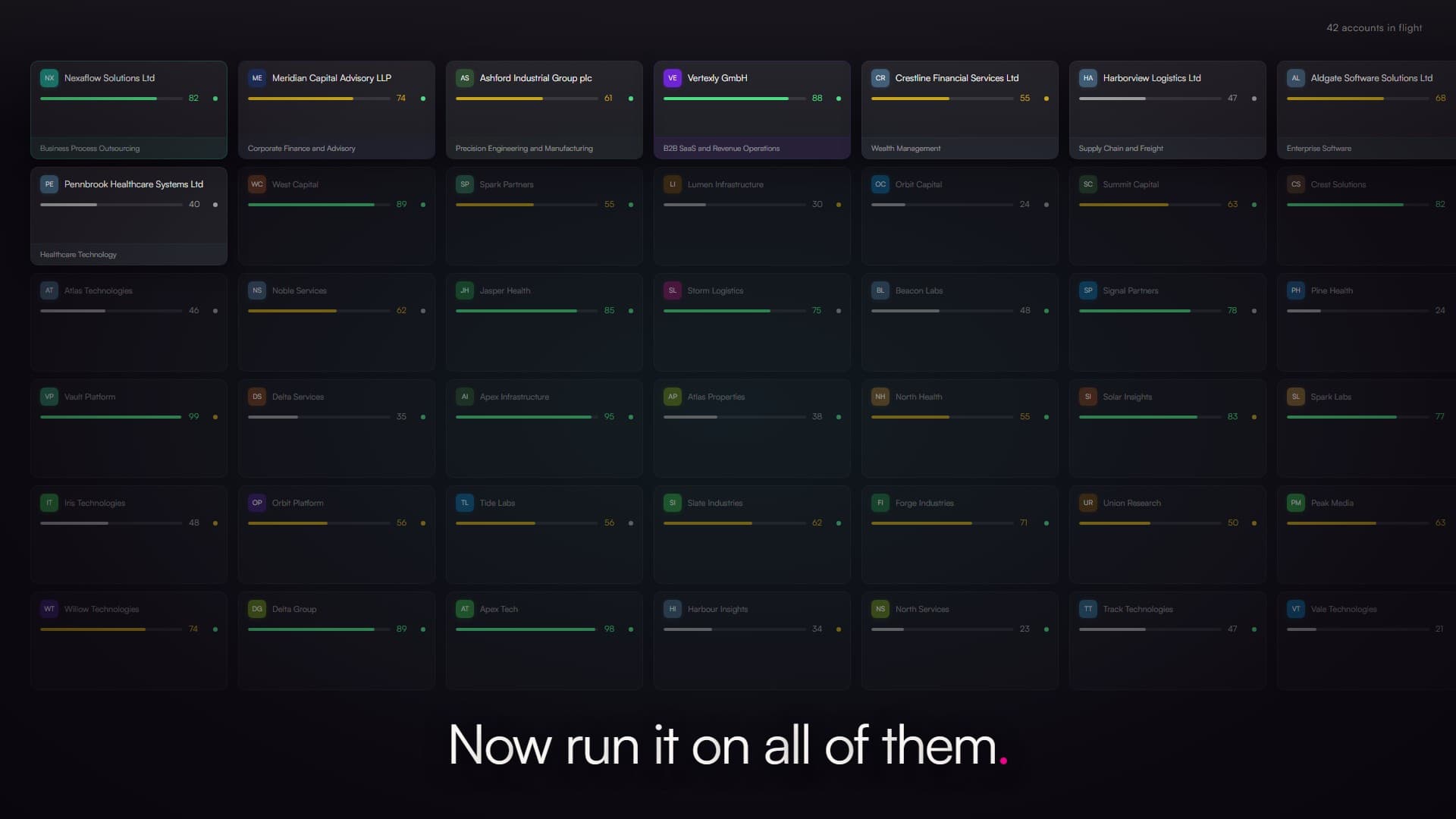
From Target-Account List to First Meeting in Fourteen Days
A concrete operating plan for the first two weeks of an enrichment-led campaign: what happens on which day, who owns it, and where campaigns usually stall.
The Shape of the Fortnight
Most outbound campaigns stall in the gap between "we have the list" and "reps are having conversations". The list sits in a shared drive while someone researches accounts by hand, someone else drafts a landing page, and the campaign that was urgent in the kickoff quietly ages.
This playbook closes that gap on a fixed clock. Days one to three: the list. Days three to five: enrichment and assets. Days five to twelve: outreach in waves. Days twelve to fourteen: read the signal and re-aim. It assumes the pipeline work (enrichment, page generation, asset personalisation) is automated; if yours is manual, the same steps apply but the clock roughly triples.
Days One to Three: The List Is the Campaign
Everything downstream inherits the quality of the target account list, so the first three days belong to it.
Define the segment in one sentence: who is this campaign for, and what change in their world makes it timely? If the sentence takes a paragraph, the segment is two campaigns pretending to be one.
Build the list to a fixed shape: company, domain, industry, size band, and the best-guess contact per account. The domain column matters more than any other; it is the anchor that keeps enrichment from confusing similarly named companies. Two hundred accounts is a strong first-campaign size: big enough to read signal from, small enough to review by eye.
Then do the review by eye. Thirty minutes scanning for obvious misfits saves days of polluted results. Every account you would be embarrassed to book a meeting with should leave the list now.
Days Three to Five: Enrichment and Assets
Upload the list. The Enrichment Engine returns each account as a contextual record: what the company does, what is changing for them, the stack context, the verified contact, and an opening angle. Personalised Campaigns builds the account-specific landing page and asset from the same records.
Your job in this window is not production; it is quality assurance. Pull ten records at random and read them like a sceptical rep. Does the opening angle hold? Does the page read as built-for-them? If eight of ten pass, ship. If fewer, tighten the segment definition (the usual culprit) and re-run before any email goes out.
This is also when sequencing gets written. With contextual records in hand, the sequence stops being creative writing and becomes assembly: opener from the angle field, proof point from the context, link to the account's own page.
Days Five to Twelve: Outreach in Waves
Do not send to two hundred accounts on day five. Send to forty.
The first wave is an instrument. It tells you whether the angle lands, whether the page converts clicks, and whether replies come from the segment you thought you were targeting. Read it for two days, adjust one variable (the angle usually, the segment occasionally), then release the second wave. Three waves across a week beats one blast by every measure that matters, and it protects deliverability while your domain warms to the volume.
Reps work replies the day they land. That sounds obvious; it is the most commonly broken rule in outbound. A reply that waits three days converts like a cold email. The fortnight only works if the humans move at the speed of the pipeline.
Days Twelve to Fourteen: Read, Then Re-Aim
At the end of the fortnight, three numbers tell the story: reply rate by wave (did the adjustments work?), page engagement per account (who consumed the content without replying?), and meetings booked by segment slice (which kind of account actually converted?).
The page engagement number is the one teams skip and should not. An account that spent four minutes on its personalised page and did not reply is not a dead lead; it is a warm account with a timing problem. Those accounts seed the follow-up wave, and they are the direct payoff of sending buyers to a page that was worth their four minutes.
Then the loop closes: what wave three learned becomes wave one of the next campaign. Run the fortnight again with a sharper segment. The second campaign should outperform the first, not because the team worked harder but because the system now knows more.
Where Campaigns Stall, and the Fix
Three stalls account for most failed fortnights. The list stalls when nobody owns the segment sentence: fix it by refusing to start until the sentence exists. The middle stalls when enrichment and assets are manual: that is an infrastructure gap, not an effort gap, and no amount of hustle closes it. And the back end stalls when replies wait: fix it with a same-day service-level agreement between whoever runs the campaign and whoever works the replies.
Start With the List
The whole fortnight starts with a list in the right shape. Our campaign TAL template is that shape: the seven columns we ingest, a worked example row, and notes on which columns buy the deepest enrichment. Download it, fill it with your two hundred, and day one is done before lunch.